
Contents of this article
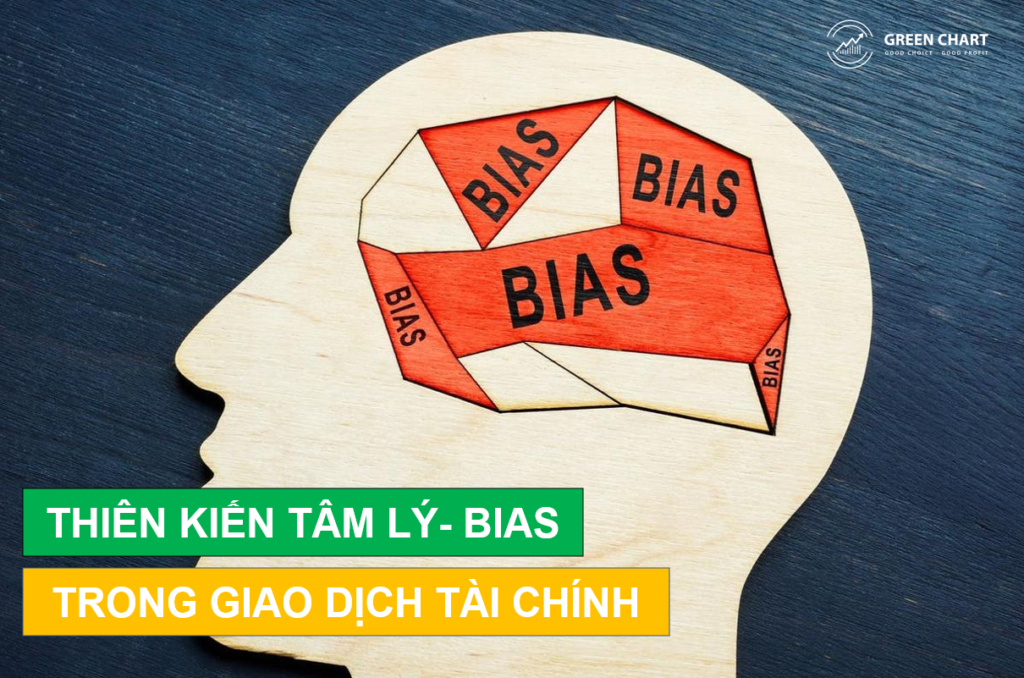
A psychological bias is like a shortcut, or a pre-programmed response, that our brain uses to help us make decisions faster. It is usually based on our past experiences, beliefs and assumptions. Biases help us make sense of the world around us and respond quickly, especially when we have incomplete information or are dealing with too much information to take everything in.

These biases are not always accurate, however, and can sometimes lead to errors of judgment. Most of the time they can be quite useful and save you time but, when it comes to trading, they can lead traders into serious mistakes.
For example, traders often keep adding to a losing position because they do not want to waste the time or money already invested. A trader may keep holding a losing trade because they do not want to admit a mistake and take the loss, even when doing so breaks their trading plan and the trade’s prospects are very poor.
So psychological biases are innate tendencies that can affect our behaviour, perception and decision-making. They are not always bad, but being aware of them can help us make better, wiser decisions, and this is true not only of trading but of every kind of decision-making.
Here are the five most common biases with the greatest impact on trading decisions:
Hindsight bias
Hindsight means recognizing a problem only after it has happened. Once an event has occurred, people believe they could have predicted its outcome, even though, in reality, they could not have done so at the time.

In trading, this tendency often leads traders to change their trading plans and rules after a recent loss or after missing a great trading opportunity. Traders come up with brand-new trading rules that would have turned the realized loss into a potential winner, based on new information. That information was not available when they originally entered the trade, or they would have had to approach the trade in a completely different way
Changing your trading rules on the basis of a single trade outcome is foolish. Changes to trading rules should be based on a large enough data set (usually around 30 trades or more), and any changes should first be checked by backtesting.
Gambler’s fallacy
The gambler’s fallacy is the belief that a particular event that has happened more often than usual in the past is less likely to happen in the future.
People tend to believe that past events can influence future outcomes. In reality, these events are completely random.
Here is an example:
When you flip a coin and it lands heads five times, many people believe heads has come up too often and that tails is more likely on the next flip. Of course, each flip is completely random and independent of the previous one. Even after 10 heads in a row, tails is no more and no less likely on the next flip.

In trading, traders believe that after five losses in a row they are due a winning trade. However, your next trade is independent of the previous one, and the probability of a winning trade does not suddenly rise or fall.
Loss aversion
This refers to people’s tendency to prefer avoiding losses over making gains. Some studies suggest that the pain of a loss is twice as strong as the pleasure of a gain. As a result, traders may hold losing trades too long in the hope that they will recover, or take profits on winning trades far too early, even though this goes completely against their trading rules and against anything their chart analysis says. Their trading decisions are driven purely by emotion.
Confirmation bias
This bias refers to the tendency to favour, interpret and remember information in ways that confirm our existing beliefs or hypotheses, while ignoring or dismissing information that contradicts them.
Example: your trading strategy gives you a buy signal and you are now in a long trade. A few hours later, you come back to your chart to check on the trade. The price action no longer looks so bullish, and there are clear signs that your trade idea may not work out. Yet because of confirmation bias, you may ignore the bearish signs and focus only on the bullish ones, even if that means using tools, indicators and concepts you do not normally use in your trading strategy.
This mindset can lead to poor trading decisions, because the trader does not properly weigh all the available information and ignores relevant possibilities. They may hold a trade even when the evidence suggests it would be better to exit, or buy more even when their signals warn against it.
The ostrich effect
The ostrich effect is when traders ignore negative information that runs counter to their trading view, like an ostrich trying to bury its head in the sand.
In trading, this can mean that traders fail to follow their trading plan and do nothing, even though their trade is moving against what they planned and should have been closed long ago. The result is a much bigger loss. Such traders also avoid looking at their losses simply because they do not want to face reality, hoping that somehow the loss will go away on its own.

Deviating from your tested trading rules is always a bad decision and will inevitably lead to inconsistency and poor trading results. It is important to make objective decisions even when doing so feels uncomfortable.
How to overcome psychological biases in trading
Psychological biases can affect your trading decisions, leading to costly mistakes and derailing your long-term trading plan. Overcoming these biases takes awareness and discipline.
Awareness lets traders notice when the quality of their decisions is slipping and they are not acting objectively. Discipline is needed to resist the urge to fall into negative patterns. Biases are hard-wired into human decision-making, and overcoming them takes time and patience. It is important to recognize that improving your trading approach is a long process. Do not be discouraged when you occasionally fall back into old mistakes.

Work on one aspect of your trading at a time, try to make sound decisions by raising your self-awareness, and keep refining your trading actions. Over time, with persistence, you will see yourself improve.
Technical Analysis course – CMT Level 1
Green Chart designed this course specifically for candidates who want to study and prepare for the CMT Level I exam in Vietnam. The 28-session programme covers theory, practice questions and mock exams. Students also receive free course materials, question banks and mock exams for their exam preparation, plus free lifetime retakes of the course.
Find out more about the course here.
Happy trading!