Contents of this article
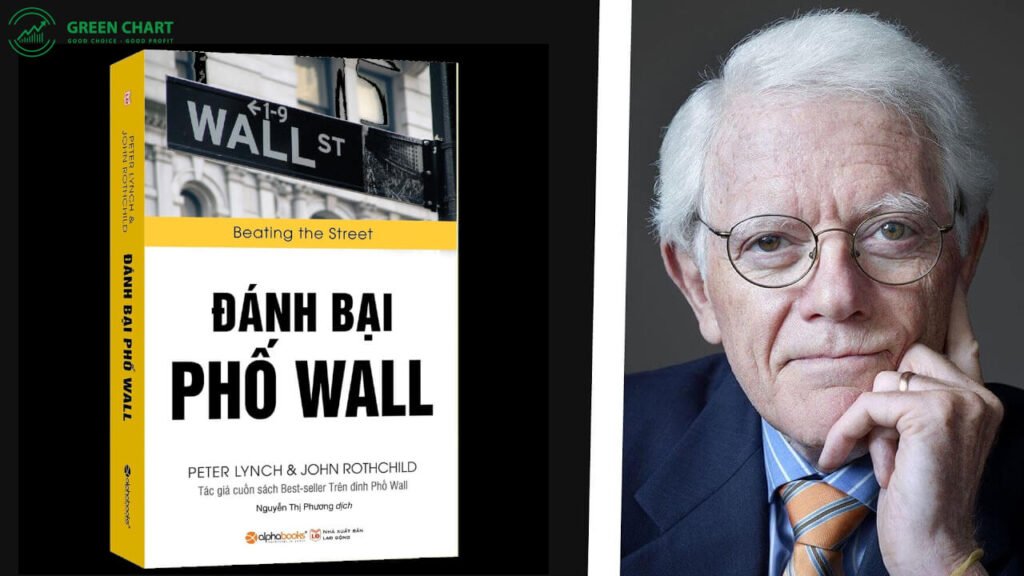
“Beating the Street” is a book for anyone who is planning, hoping or just starting to invest in the stock market. The issues it covers help you stay in control at every stage of investing, manage your portfolio well, choose good stocks, improve your investment track record and achieve ever greater rewards.
The Author of Beating the Street – Peter Lynch

Peter Lynch is known as one of the world’s top money managers. In 1977 he became manager of the Fidelity Magellan Fund and grew it from USD 20 million to USD 14 billion in just 13 years. Over that period he did not have a single losing year, and he beat the S&P 500 Index in 11 of those years.
According to Peter Lynch, intelligence is not the most important factor in stock investing; what matters is patience and steadiness. Markets will go through erratic swings, stock prices will rise and fall, and there will be many crises. A good investor keeps a steady mind and holds on to their stocks instead of dumping them.
Drawing on 13 years of successfully running the Fidelity Magellan Fund and his experience picking a great many stocks, he distilled everything into the masterpiece “Beating the Street”. It is Lynch’s own account of the investment strategies that helped him turn an obscure fund into a multi-billion-dollar one. “Beating the Street” gives us the chance to learn the philosophy of one of the greatest investors Wall Street has ever seen.
What the Book Covers

Unlike Lynch’s first book, “One Up on Wall Street”, “Beating the Street” is full of real-world examples. Peter Lynch reveals in detail the whole process of finding stocks, researching them, making a decision and then monitoring it. The early chapters are easy to follow and general. Lynch writes very candidly about his life as a portfolio manager and is not ashamed to share lessons from his investing mistakes. Interestingly, he never really had any diversification strategy, nor did he weigh his picks across particular sectors or types of investment. Instead, he simply studied hundreds of different stocks looking for favorable fundamentals. Lynch does not advocate any specific style (value, growth), although he says he “looks for undervalued companies and often finds them in sectors that are… out of favor”.
One of the main messages of “Beating the Street” is that great companies are found through personal experience rather than the advice of financial experts. The key is to keep paying attention to what clothes your family likes to buy, which restaurant chains are becoming popular in your area, and so on.
Sadly, Lynch does not offer a clear formula, although he does describe his method through specific stock examples. “Stockpicking cannot be reduced to a simple formula or a recipe guaranteed to succeed if followed strictly”, as he puts it. He stresses that “stockpicking is both an art and a science, but too much of either is a dangerous thing”.
Importantly, when Lynch talks about “undervalued” businesses, he does not necessarily mean stocks with a low P/E, but stocks priced low relative to their long-term potential. He repeats several times that a high-P/E company growing quickly will ultimately do better than a lower-P/E company growing more slowly.

Something Lynch mentions several times in “Beating the Street”: he recommends reviewing every stock in your portfolio every six months and deciding whether to add to it (when earnings and other fundamentals have improved but the stock price does not reflect this), sell it (when the opposite happens) or do nothing.
Other messages in the book:
- Don’t try to forecast the macro picture (exchange rates, currencies, inflation).
- Don’t get carried away by gloomy big-picture theories – there is always something to worry about, and that is no reason to sell stocks.
- Everyone needs knowledge and understanding to make money from stocks.
- Focus on a few companies (8–12) and invest in about 5. If you cannot find any business you find attractive, keep your money in the bank until you discover a company you believe in.
Our Thoughts on Beating the Street – Peter Lynch
To me, Peter Lynch’s investment principles are very similar to Warren Buffett’s. Both point out that stocks represent stakes in real businesses and that, over the long run, stocks follow the company’s fundamentals. They also advise ignoring macro forecasts and keeping emotion out of investment decisions as much as possible. Both believe stocks are the best investment choice over the long term. Doing a great deal of genuine research also makes Lynch’s approach similar to that of the young Warren Buffett. Finally, both recommend holding a concentrated portfolio of well-understood stocks rather than trying to diversify through poorly researched ones.
For beginning investors, “Beating the Street” is an invaluable handbook – investment advice blended seamlessly with personal experience. It deserves its place on our list of great books on the stock market worth reading and reflecting on.
Technical Analysis Course – CMT Level 1
Green Chart designed this course specifically for candidates in Vietnam who want to study and prepare for the CMT Level I exam. The program includes 27 sessions of theory, practice questions and mock exams. Students also receive the study materials, question bank and mock exams free of charge to support their exam preparation, and can retake the course for free for life.
See full course details here.
Download the PDF of the book HERE.
“Stock Trading For A Living” Course
Green Chart designed this course to build a solid foundation in fundamental analysis & stock valuation (Fundamental Analysis), while showing students how to integrate it effectively into their existing trading system, especially for traders who already use technical analysis (Technical Analysis). The program includes 5 theory sessions and 6 months of hands-on trading guidance in the live market with the instructor.
See full course details here.