Contents of this article
What Is the Commodity Market?
The commodity market is one of the oldest markets in the world, born from the need to exchange goods between individuals, countries and regions around the world. The first recorded centralized commodity exchange was the Chicago Board of Trade (CBOT, USA) in 1848.

What is the commodity market? How do you invest in commodities?
1. What Is Traded in the Commodity Market?
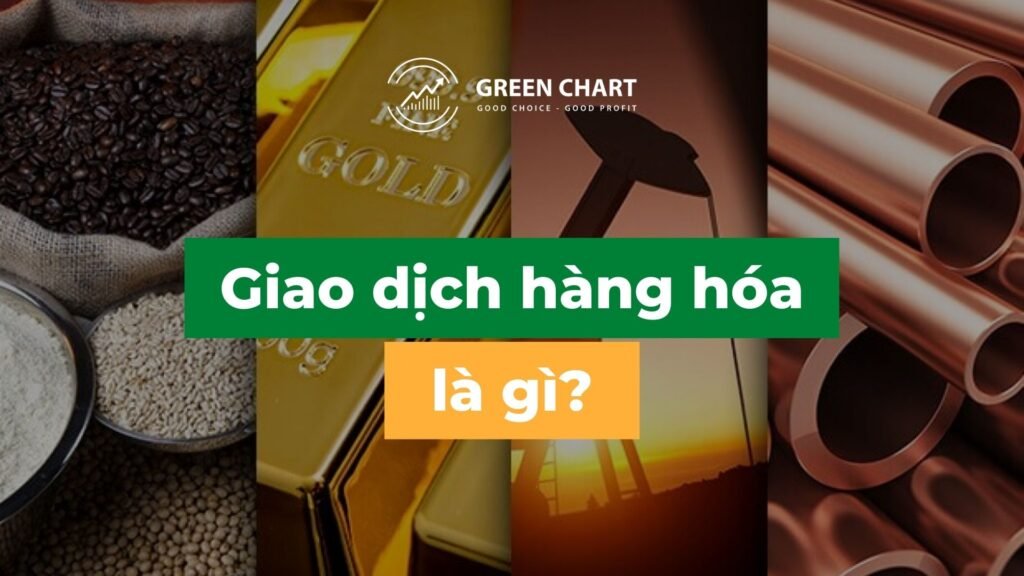
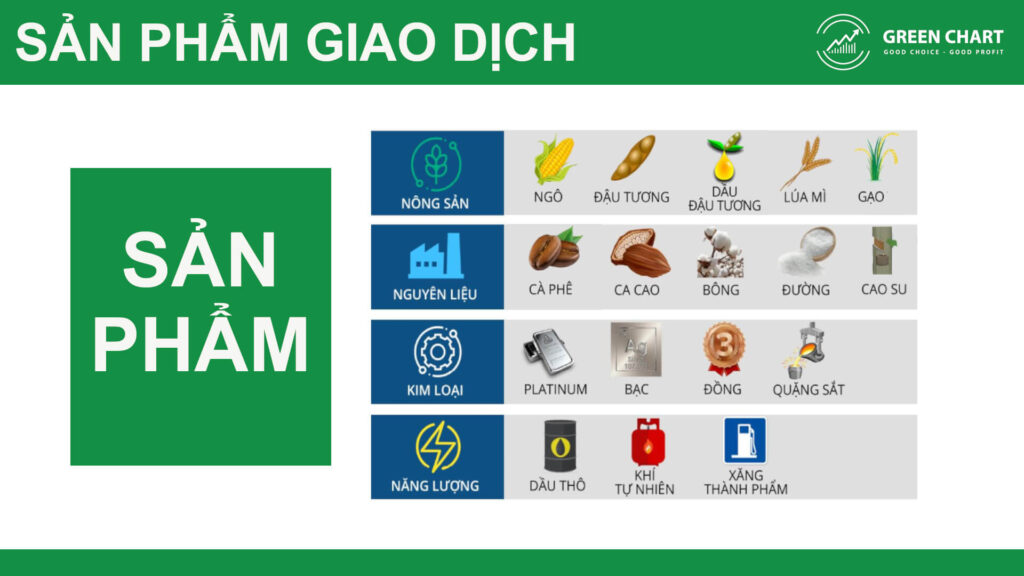
Commodities are divided into 4 main groups based on their use.
- Energy: crude oil, natural gas, gasoline…
- Agriculture: corn, wheat, soybeans, rice…
- Metals: copper, gold, platinum, iron ore…
- Industrial raw materials: coffee, cocoa, sugar, rubber…
In fact, investors do not buy and sell physical goods directly; they trade commodity futures contracts. This adds liquidity to the commodity market without changing the basic characteristics of each commodity.
Commodity futures are issued and traded centrally on commodity exchanges around the world and are standardized according to each exchange’s rules. For example, WTI crude oil futures are listed on NYMEX, with a contract size of 1,000 barrels.
What’s more, each product comes in many different expiries, giving traders plenty of choice. For example, WTI crude oil has contracts for all 12 months of the year.
Exchanges
There are many commodity exchanges around the world, where commodities are traded centrally. Exchanges are also where commodity futures contracts are issued. Here are some of the major ones:
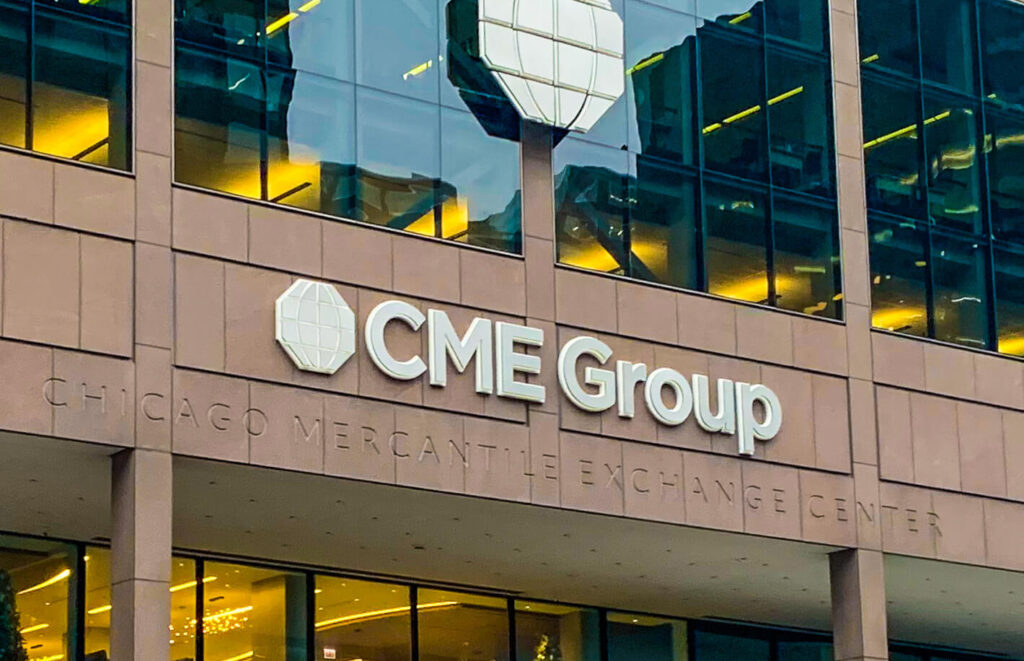
- Chicago Board of Trade (CBOT): a CME Group exchange in the US, listing corn, wheat, soybeans and more…
- New York Mercantile Exchange (NYMEX): a CME Group exchange listing WTI crude oil, platinum and more…
- Commodity Exchange Inc (COMEX): a CME Group exchange listing gold, copper, silver and more…
- Intercontinental Exchange (ICE): listing coffee, cocoa, sugar and more… ICE includes several smaller exchanges as branches, including the US (ICE US), the EU (ICE EU), Singapore, Abu Dhabi and others…
The Mercantile Exchange of Vietnam (MXV) is where traders in Vietnam trade commodities centrally. MXV does not list any products of its own, but it is connected with other exchanges around the world such as CME, ICE and LME, through which traders can trade commodities on exchanges worldwide.

Below is the list of products traded on MXV.
Characteristics of the Commodity Market
Because it is a futures market, the commodity market lets investors trade in both directions. Traders can open long positions to profit from rising prices and short positions to profit from falling prices. This attracts more investors than traditional markets such as stocks, which in Vietnam can only be traded one way, with no short selling.
Investors can also use leverage (margin) to trade commodities, as in many other derivatives markets. Even so, given the nature of futures contracts, the capital each investor needs is far from small. Traders need at least VND 15–20 million to open a position, but to manage capital effectively and diversify easily, a trader needs from VND 500 million. MXV currently provides margin free of charge (no interest is paid), which is a plus for this channel.
In addition, many commodities trade nearly 24 hours a day, so investors can take part in the market at any time.
Above all, an important feature of this market is its legal status. The commodity market in Vietnam is licensed by the Ministry of Industry and Trade, which helps keep traders’ deposits and withdrawals safe and ensures market transparency.
Who Takes Part in the Commodity Market?
Like other derivatives markets, the commodity market was created mainly for hedging. Producers and traders of commodities fear price risk, which can hurt their profits, so they use futures contracts to hedge. For example, a corn farmer who fears that falling corn prices will cut his profit will open a short position in corn futures. Learn about short selling here.
Today, besides hedging, traders also turn to the commodity market to speculate on price moves. Hedge funds, as well as traders like us, trade the market with this aim.
Two-way trading and the use of leverage attract many risk-tolerant investors who like short-term trading (swing trading). At the same time, only investors with large capital can take part in this market effectively. Even so, commodities can also be a profitable long-term investment; traders who master the fundamentals of each commodity’s seasons and cycles can make a profit.
Adding commodities to your portfolio is also a way to diversify and reduce risk. For example, if you are a stock investor worried about inflation, adding commodities to your portfolio will help reduce that risk.
Happy trading !
“Stock Trading For A Living” Course
Green Chart designed this course to build a solid foundation in fundamental analysis & stock valuation (Fundamental Analysis), while showing students how to integrate it effectively into their existing trading system, especially for traders who already use technical analysis (Technical Analysis). The program includes 5 theory sessions and 6 months of hands-on trading guidance in the live market with the instructor.
See full course details here.