Contents of this article

When investing in stocks, have you ever felt regret after making a decision, only for unexpected news or events around that stock to emerge right afterwards and send its price up or down against your plan, making your decision inaccurate and ineffective? That is the problem of “asymmetric information” we will discuss in this article.
In that situation, you wish you had known about the news or event beforehand so you could have made a better decision. You think that if you were one of the company’s key insiders you would already have known, and that would certainly have been a big advantage.
In stock investing in particular, and in every area of business in general, this situation is usually described by the concept of “asymmetric information”. So:
What is asymmetric information?
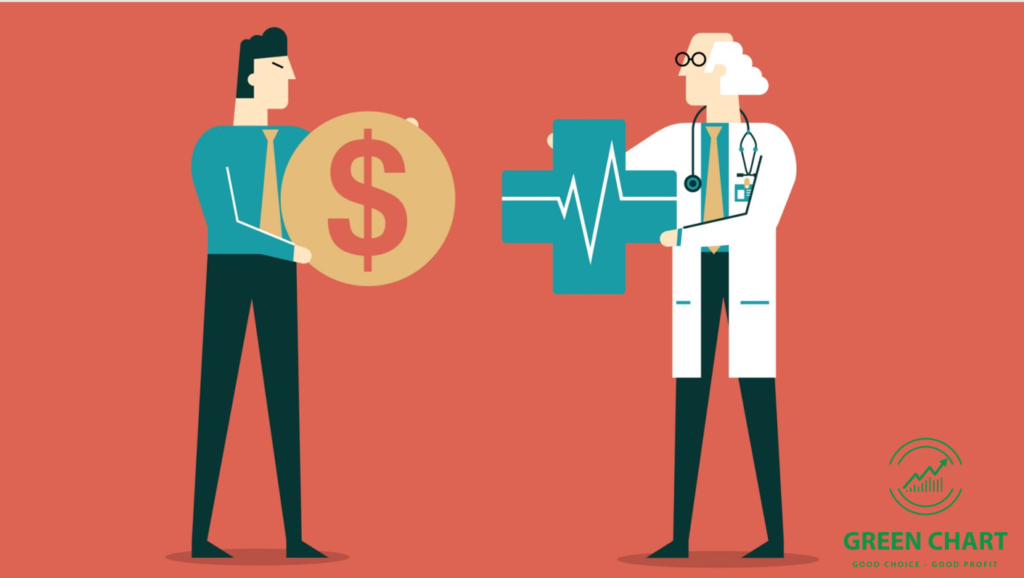
Information asymmetry (or asymmetric information) in the stock market refers to a situation in which one party to a transaction knows more than the others, making decision-making less objective.
Asymmetric information in the stock market
In an ordinary transaction, the buyer is usually at an information disadvantage compared with the seller, because only the seller really knows the product. The seller can therefore easily set the price to suit their own goals by highlighting favourable information and hiding unfavourable information about the product from the buyer.
The consequences of asymmetric information
Asymmetric information allows the party with more useful information to gain the upper hand in a transaction and act in its own interest. This is very common in the stock market: before you even know what is happening with a stock you hold (and before any information has been published), many other investors are already dumping it (usually on bad news) or accumulating it (on good news), because they have obtained confidential information and acted ahead of everyone else.
Such actions make the market unbalanced and opaque, strongly affect investors’ trading decisions, and seriously undermine the efficiency of the stock market. So before trading, investors need to actively seek out accurate and transparent sources of information.
Asymmetric information can arise in any area of life, from small retail purchases to the economy as a whole. Typically, when the risk of asymmetric information arises in a particular transaction, it can have two consequences:
First, asymmetric information leads to adverse selection
Put simply, asymmetric information leads us to make the wrong choice, and it usually happens before the transaction takes place. A very famous example of adverse selection is the market for lemons (a term for the used-car market), where buyers lacking information end up buying poor-quality products or services.
Adverse selection
Specifically, the seller knows the quality of each car and will try to sell poor-quality cars at the same price as good ones. Buyers, for their part, know about this disadvantage, so they choose to pay only an average price, reasoning that if they do get ripped off, at least they will not have overpaid by much.
As a result, poor-quality and good-quality cars sell at the same price and are equally hard to sell. According to George Akerlof (1970), this is adverse selection: only low-quality cars are sold at the average price, while good-quality cars are not (because sellers do not want to sell good cars at such a low price). Across the economy as a whole, this benefits neither sellers nor buyers, and it is a sign of market failure.
Similarly, in the stock market, when there is information asymmetry, buyers end up buying shares of poorly performing companies while passing over those of high-performing companies. Over time, high-quality securities are easily pushed out of the market, leaving only poor-quality ones; the market gradually loses liquidity, operates inefficiently and shrinks.
Second, asymmetric information also leads to moral hazard
Moral hazard arises when the party with more information can change its behaviour to the detriment of the other party. Unlike adverse selection, then, moral hazard occurs after the transaction has taken place.

Moral hazard
In the stock market, brokers (or investment advisers) earn commission based on the actual trades of the clients they manage (from those clients’ trading fees and other service fees). So to hit their KPIs or boost sales for their firm, brokers, with their information advantage about stocks, may engage in behaviour involving moral hazard, such as:
- Advising clients to trade constantly, or to use high margin to increase service fees, or
- Recommending that clients trade excessively risky stocks, and so on
Another typical example of this risk in the stock market involves investment funds and fund management companies. With a passive fund (typically an ETF), for example, instead of your money being invested in a separate account, it is pooled with other investors’ money and entrusted to the fund to manage.
Because of this mechanism, the fund manager could act against their original commitments to investors (making overly risky deals, failing to disclose information to investors, or raising management fees abnormally, and so on), which can seriously harm investors (investment losses, excessive management costs, etc.).
Asymmetric information, adverse selection and moral hazard all have a negative impact on market development, especially in developing markets such as Vietnam’s stock market. Asymmetric information therefore deserves serious study and concrete remedies, based on stronger oversight and better-quality supervision by regulators.
Asymmetric information is one of the key issues in trading risk management; we have a dedicated section on this topic that you can read here.
Happy Trading!
The “Stock Trading For A Living” course
Green Chart designed this course to give you a solid grounding in fundamental analysis & stock valuation, and to show you how to integrate it effectively into your existing trading system, especially if you already trade with technical analysis. The programme includes 5 theory sessions and 6 months of hands-on trading guidance in the live market with the lecturer.
Find out more about the course here.