Contents of this article
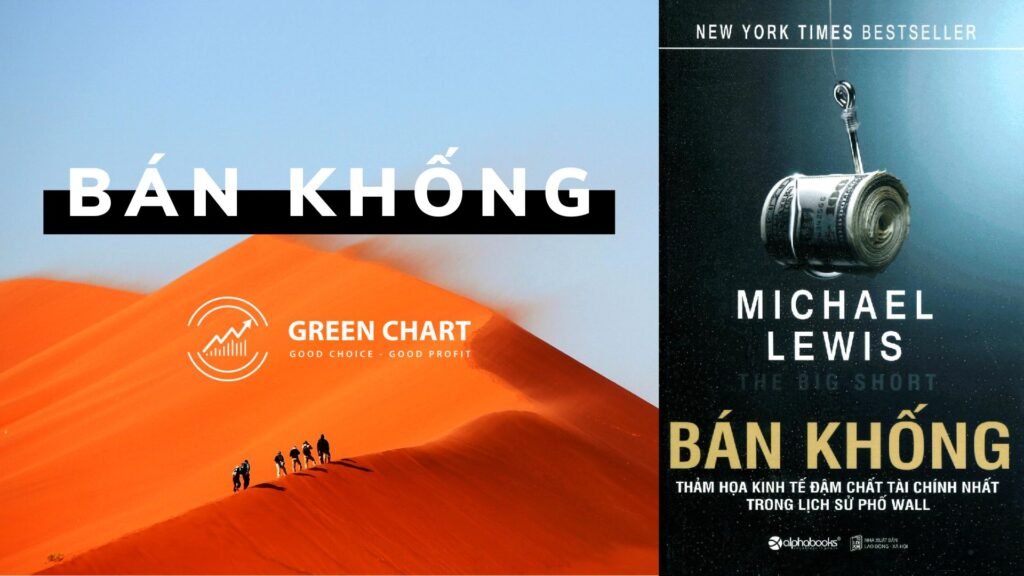
The Big Short is a book by Michael Lewis, published in 2010. In it, the author tells a gripping story, exposing the 2008 financial crisis with great honesty and depth. Ever since leaving Wall Street, Lewis has proven his talent through witty prose and rigorous, well-argued analysis of financial markets.

Who Is the Author of The Big Short?
Michael Monroe Lewis is a famous American author and a talented financial journalist. He has also been a major contributing editor at Vanity Fair since 2009, writing mainly about business, investing and economics. He is best known for his non-fiction, especially books about major financial crises.
He has written a great many articles, each of which draws wide attention from investors and the wider financial community. Several of his books have been adapted into acclaimed films, such as Moneyball and The Blind Side: Evolution of a Game… And one of the finance books that made his name is The Big Short.

What Is The Big Short About?
First, the definition of short selling: Short selling in financial markets means profiting from a fall in the price of a particular asset or security. Investors borrow securities from another party, sell them in the expectation that the price will fall, and later buy them back. Finally, they return the borrowed securities to the lender and keep the difference.
The Big Short tells the stories behind Wall Street during the 2008 financial crisis. The author offers a different view of the positions taken by the financial titans and speculators of the time. The 2008 financial crisis was an economic disaster with some of the heaviest consequences in history; losses were estimated in the trillions of dollars. With no other option, the US government had to use taxpayers’ money to bail out major financial groups and save them from bankruptcy.
In The Big Short you will hear in detail about Standard & Poor’s, Moody’s, Morgan Stanley, Bear Stearns, Citigroup, Goldman Sachs and AIG – firms that behaved as if they knew nothing about financial markets. You will also meet well-known figures such as Steve Eisman and Michael Burry. They were seen as eccentrics, but they were among the very few who could see the rot in the entire financial system before it collapsed.
In fact, the crisis had been building quietly for years in the nooks and crannies of the market, where the sun never shone and where the US Securities and Exchange Commission dared not, or could not be bothered to, look: the derivatives markets for real estate and bonds, where the eccentrics engineered unsustainable securities. They profited from the hardship and misery of people at the bottom – people who could not even repay their own debts.
In the end, the questions are:
- Who recognized the risk hidden in the illusion of ever-rising house prices?
- What risks were created by synthetic bonds built on a flimsy base of dubious mortgage collateral?
- Who saw this disaster coming and made billions of dollars from it?
- What qualities allowed a handful of people to hold their ground while colleagues and friends mocked them as cowards?
Our Thoughts on The Big Short
The Big Short confirms once again Michael Lewis’s intelligence and extraordinary talent. He paints a remarkable story set in the most glittering place in the world. Through his writing, he also gives readers a great deal of valuable knowledge about investing in financial markets. He presents many different perspectives rather than offering a superficial judgment. Every issue is explained clearly and concretely, in plain but compelling prose.
The book rests on a broad knowledge base, drawing on ideas from Minsky, Rajan, Friedman and many others. The author focuses on the problems of a highly leveraged credit economy in which lending is concentrated in real estate. Through The Big Short you will see that Wall Street’s financial experts can be as naive as children, and you will see the tension between personal conviction and expert opinion.
If you are interested in financial markets and stocks, The Big Short is truly worth reading, an invaluable resource that captures the full picture of an economic crisis. It is not easy to stand apart from the frenzy of the crowd and believe that most of what the financial news reports is wrong, or that much of what the market’s big players say is deceptive. So to succeed in this difficult market, you must always stay humble while holding firm to your own views, not changing your mind simply because of what the big names say. Listen with a clear, rational mind!
Technical Analysis Course – CMT Level 1
Green Chart designed this course specifically for candidates in Vietnam who want to study and prepare for the CMT Level I exam. The program includes 27 sessions of theory, practice questions and mock exams. Students also receive the study materials, question bank and mock exams free of charge to support their exam preparation, and can retake the course for free for life.
See full course details here.
Download the PDF of the book HERE.
“Stock Trading For A Living” Course
Green Chart designed this course to build a solid foundation in fundamental analysis & stock valuation (Fundamental Analysis), while showing students how to integrate it effectively into their existing trading system, especially for traders who already use technical analysis (Technical Analysis). The program includes 5 theory sessions and 6 months of hands-on trading guidance in the live market with the instructor.
See full course details here.