Contents of this article
- An Overview of How to Make Money in Stocks
- About the Author, William O’Neil
- Contents of How to Make Money in Stocks
- Overview of the Content
- Part I: CAN SLIM, the Most Profitable Investment System
- Part II: Be Smart from the Start
- Part III: Becoming a Professional Investor
- Our Thoughts on the Book
- Technical Analysis Course – CMT Level 1
- “Stock Trading For A Living” Course
An Overview of How to Make Money in Stocks
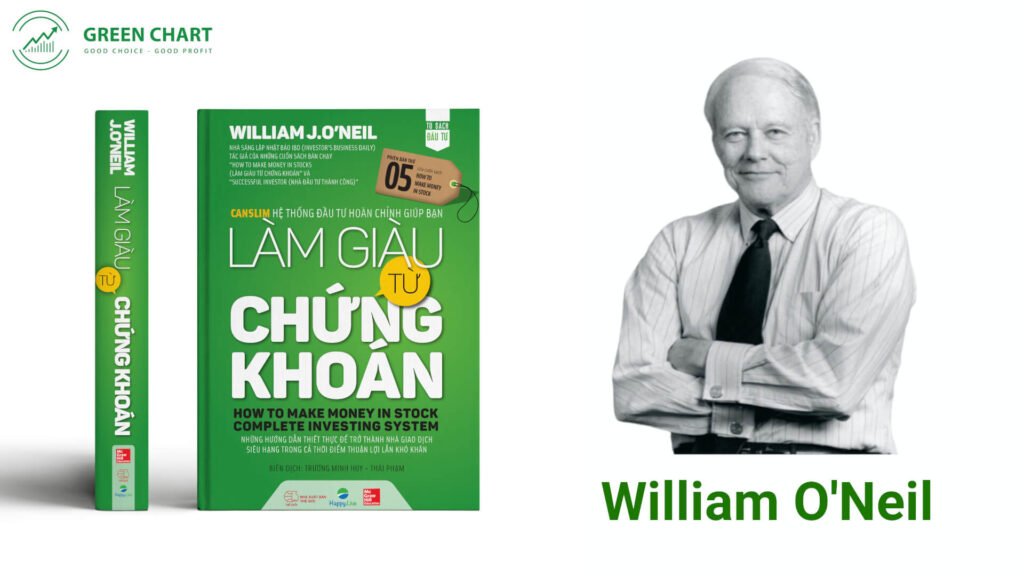
How to Make Money in Stocks – the stock market classic by William O’Neil. Since it was first published in 1988, it has been reissued many times up to today. It is one of the books that newcomers, active investors and even professional stock investors choose to read and study. Through How to Make Money in Stocks readers are introduced to the CAN SLIM rules – regarded as one of the most effective stock-selection methods in equity investing.

About the Author, William O’Neil
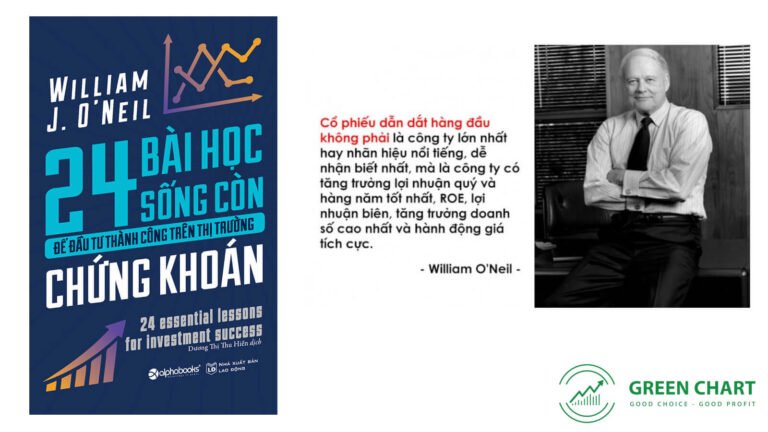
Founder of Investor’s Business Daily, William J. O’Neil created the famous CAN SLIM investment strategy and wrote several bestsellers, including How to Make Money in Stocks, The Successful Investor and 24 Essential Lessons for Investment Success. Born on 25 March 1933 in Oklahoma City, O’Neil grew up in Texas and earned a bachelor’s degree in business from Southern Methodist University. Early in his financial career he worked as a retail stockbroker, and at 30 he bought a seat on the NYSE.
O’Neil is remembered for his foresight in pioneering the use of computer technology in stock investing. He also developed the first computerized database of stocks in the 1960s, and it is still in use today.

Contents of How to Make Money in Stocks
Overview of the Content
The book mainly gives readers the foundational knowledge behind the CAN SLIM investment system – a system proven in practice to reduce risk and maximize returns for investors.
After 12 years of research, the American Association of Individual Investors found that CAN SLIM had delivered a return of 2,763.3%, many times higher than the 14.9% of the S&P 500.
Through How to Make Money in Stocks you will learn proven techniques for picking good stocks, mutual funds and ETFs to help maximize your investment returns.
How to Make Money in Stocks is divided into 3 main parts spanning 20 chapters. It opens with the CAN SLIM investment system, followed by the smart thinking that turns you into a professional stock investor.

Part I: CAN SLIM, the Most Profitable Investment System
The first part is also the most important part of How to Make Money in Stocks. First, the basic trading rules are derived from the biggest winning stocks in the history of the US stock market. Across nearly 100 pages, many historical chart examples are shown with their corresponding signals and commentary. O’Neil stresses that charts are essential to successful trading, because human nature and the law of supply and demand never change.
The first part also describes the individual components of the CAN SLIM strategy, which is still popular today. Put simply, the criteria of the system are as follows:
C = Current quarterly EPS and sales growth that is high and accelerating: the company should show substantial earnings growth over the same quarter last year; the higher the better.
A = Annual earnings increases: if your goal is to pinpoint stocks that will outperform, it is important to look at the company’s annual earnings growth rate.
N = New products, new management and new price highs from a sound base: investors should look for companies developing important new products. Innovative companies with entirely new products can grow quickly and at high profit margins.
S = Supply and demand: choose stocks with a low free float (the share of stock freely available to trade).
L = Leader or laggard? Focus on buying the strongest stocks in the best-performing industries. Market leaders usually have the highest operating margins and gain market share quickly.
I = Institutional sponsorship by financial institutions and investment funds: a good stock does not need a great many institutional shareholders, but it should have some. Favor stocks where the number of institutional owners is rising, or where institutions have added to their positions in the most recent quarter.
M = Market direction: this part explains O’Neil’s method for gauging the market’s trend and why you should master it to cut down your losing trades. The author discusses how to protect yourself from major market declines, stop-loss orders, identifying major market tops, and spotting bottoms so you can re-enter at the right time.
Part II: Be Smart from the Start
The second part of How to Make Money in Stocks covers closing positions at a profit or a loss, risk management and the most common mistakes. The key to success is, first of all, keeping your composure when a trade goes against you. That means selling promptly at the 7–8% threshold before the loss gets too large. When closing profitable positions, it is better to sell too early than too late. Accordingly, it makes sense to target a gain of at least 20% and to sell strong positions if the trade lasts beyond the minimum holding period of 8 weeks.
Part III: Becoming a Professional Investor
This part is fairly general. First, various chart patterns and industry analysis are presented clearly. The next chapter offers tips on watching the market and on how to react to market news. The best section of Part III is the final chapter, which gives you a useful bullet-point list so you can review the essential knowledge quickly and easily. It is an excellent chapter to revisit often, since it sets out important trading rules and guidelines that help you stay focused and properly disciplined.
Our Thoughts on the Book
The greatest value of How to Make Money in Stocks lies in its description of the CAN SLIM criteria and its many historical chart examples from the US stock market. O’Neil favors holding a few well-chosen stocks and watching them closely, rather than diversifying widely and ending up with only mediocre results.
In short, this is one of the books every stock investor should have on their shelf, and it is useful in other areas of finance too. It is a valuable handbook distilled from the author’s deep expertise and real-world experience. If you are passionate about investing and want to succeed in this field, How to Make Money in Stocks is a valuable resource you should not miss.
Technical Analysis Course – CMT Level 1
Green Chart designed this course specifically for candidates in Vietnam who want to study and prepare for the CMT Level I exam. The program includes 24 sessions of theory, practice questions and mock exams. Students also receive the study materials, question bank and mock exams free of charge to support their exam preparation, and can retake the course for free for life.
See full course details here.
Download the PDF of the book HERE.
“Stock Trading For A Living” Course
Green Chart designed this course to build a solid foundation in fundamental analysis & stock valuation (Fundamental Analysis), while showing students how to integrate it effectively into their existing trading system, especially for traders who already use technical analysis (Technical Analysis). The program includes 5 theory sessions and 6 months of hands-on trading guidance in the live market with the instructor.
See full course details here.