
Contents of this article
- What Is Treasury Stock?
- Characteristics of Treasury Stock
- How Treasury Stock Appears in the Financial Statements
- Why Do Companies Buy Back Treasury Stock?
- Protecting Shareholders’ Interests
- Concentrating Ownership
- Improving Financial Ratios
- A Way to Return Profits to Shareholders
- A Source of Future ESOP Shares
- “Stock Trading For A Living” Course
Treasury stock is stock that has been bought back by the company that issued it. Why do companies spend money buying their own shares, and how does this benefit investors? Let’s find out in the article below.

What Is Treasury Stock?
Treasury stock (treasury shares) is, simply put, stock that a company has issued and then bought back with its own funds.
We know that people who hold shares are called shareholders, and they can be individuals or legal entities. When a company wants to raise capital, it issues shares and sells them to investors, who become shareholders. Buying back treasury stock is the reverse of issuing shares: the company buys its own shares back from investors, which reduces the company’s equity.
Characteristics of Treasury Stock
Shares are mainly traded on the secondary market, between investors, without the issuing company taking part. When a company buys back treasury stock, the number of shares circulating on the secondary market falls. Note that shares issued and shares outstanding are not the same thing.
- Issued shares are the shares the company has issued and sold to the public.
- Outstanding shares are the shares that can be traded freely on the secondary market, equal to issued shares minus treasury shares.
For example, for VRE below, the number of shares issued differs from the number outstanding. The difference of 56.5 million shares is the treasury stock.
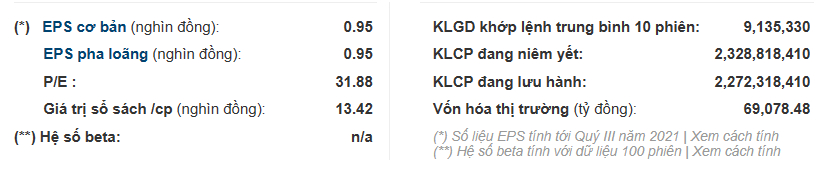
VRE stock information
In addition, treasury shares do not carry the basic rights of shares, such as voting rights and the right to dividends. A company may also buy back only a specified number of treasury shares and must publicly disclose information such as the number of shares and the timing of the purchase, both before and after the buyback.
How Treasury Stock Appears in the Financial Statements
When a company spends money to buy back shares, the cash under assets obviously falls. To balance the two sides of the balance sheet, a treasury stock line is added under equity, shown as a negative number. So buying back treasury stock reduces the company’s equity.
The buyback does not generate any profit, so the income statement does not change. In the cash flow statement, the money used to buy back treasury stock is a cash flow from financing activities.
Why Do Companies Buy Back Treasury Stock?
Treasury shares carry no voting rights and no dividends, so why do companies still spend money buying them back?
Protecting Shareholders’ Interests
One essential way to protect shareholders’ interests is to support the share price. When the share price falls, the company buys back treasury stock to create extra demand and give the price momentum to rise. So news of a company buying back its shares is usually positive for the share price.
A buyback also shows that the company is investing in itself and believes in its business strategy, which also supports the share price.
In addition, if the share price rises in the future, the company can sell these treasury shares to new investors to raise capital and profit from the price difference.
Concentrating Ownership
Buying back treasury stock reduces the number of shares outstanding and increases investors’ ownership percentages. This helps the company weed out shareholders who buy only to manipulate the price without contributing to the company’s development strategy.
Higher ownership percentages also give strategic shareholders more voting power at General Meetings of Shareholders.
Improving Financial Ratios
As explained, buying back treasury stock does not change profits, so EPS rises as the number of shares outstanding falls. Lower equity also lifts ROE. Better key financial ratios make the stock more attractive.
P/E-based valuations also come out higher, which is another driver for the share price.
A Way to Return Profits to Shareholders
When a company makes a profit, instead of using part of it to pay dividends, it can use the money to buy back shares from some investors, giving them cash plus a profit if the buyback lifts the share price.
A Source of Future ESOP Shares
Buying back treasury stock also lets the company use these shares to reward some employees through an ESOP (Employee Stock Ownership Plan) without issuing new shares. ESOP shares reward staff who have made outstanding contributions to the company, making them more loyal and motivated.
“Stock Trading For A Living” Course
Green Chart designed this course to build a solid foundation in fundamental analysis & stock valuation (Fundamental Analysis), while showing students how to integrate it effectively into their existing trading system, especially for traders who already use technical analysis (Technical Analysis). The program includes 5 theory sessions and 6 months of hands-on trading guidance in the live market with the instructor.
See full course details here.